
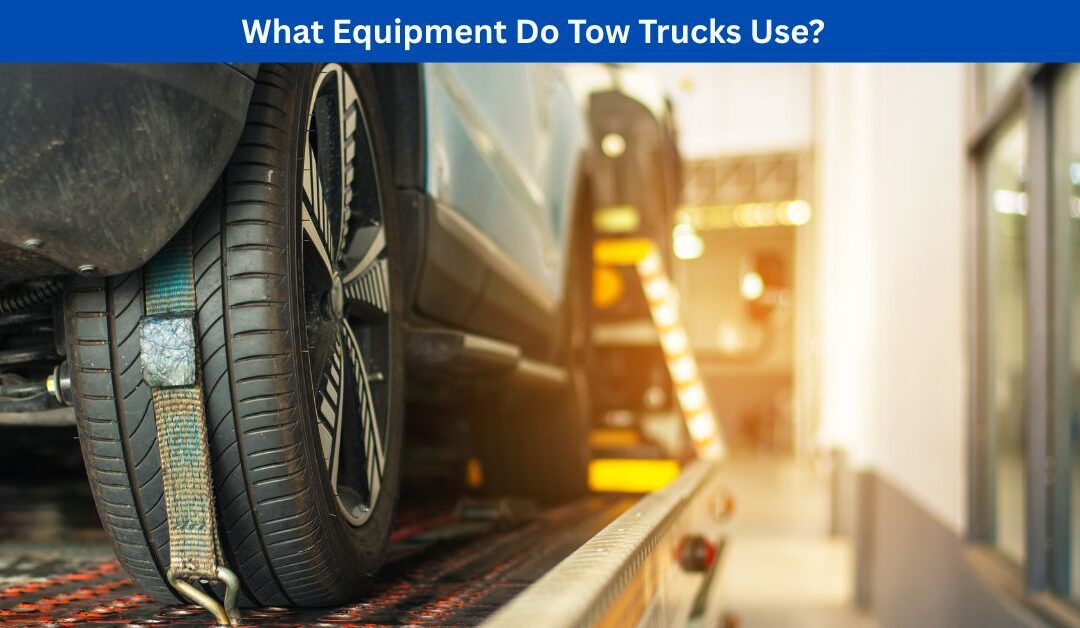
Tow trucks are not just powerful vehicles—they are equipped with a wide range of specialized tools designed to safely recover, lift, and transport vehicles in different situations. Whether it’s a simple breakdown, an accident recovery, or a heavy-duty towing job, the equipment used plays a crucial role in ensuring safety and efficiency. Understanding what equipment tow trucks use helps you see how professional towing services handle vehicles with care and precision.
1. Hydraulic Systems for Lifting and Control
One of the most important pieces of equipment in modern tow trucks is the hydraulic system. Hydraulics are used to lift, lower, and control heavy vehicles smoothly and safely. These systems allow tow truck operators to handle vehicles that would otherwise be impossible to move manually.
Hydraulic arms are commonly used in flatbed and integrated tow trucks. They help tilt the bed of the truck so that a vehicle can be loaded easily. Once the vehicle is in position, the hydraulics also help secure it and adjust its balance during transport.
The main advantage of hydraulic systems is precision. Operators can make small, controlled movements to ensure the vehicle is handled without sudden shocks or damage. This is especially important when towing damaged or luxury vehicles.
Without hydraulic systems, modern towing would be much slower, more dangerous, and less efficient. They are a core part of almost every professional tow truck today.
2. Winches and Recovery Cables
Winches are another essential tool used in towing operations. A winch is a mechanical device that uses a strong steel cable or synthetic rope to pull vehicles out of difficult situations.
Winches are especially useful for recovery work. For example, if a car is stuck in mud, sand, a ditch, or even a roadside slope, the tow truck operator can attach the winch cable to the vehicle and carefully pull it back to stable ground.
The strength of winches varies depending on the type of tow truck. Heavy-duty tow trucks use extremely powerful winches capable of pulling large trucks or buses.
Recovery cables are designed to handle high tension without breaking. They are carefully maintained and inspected regularly to ensure safety during operation. Proper use of winches requires experience, as incorrect pulling angles or excessive force can damage the vehicle.
Winches are one of the most important tools for roadside recovery and emergency situations.
3. Wheel Lifts and Towing Arms
Wheel lifts are a key part of many tow trucks, especially wheel-lift and integrated tow trucks. This equipment uses a metal yoke or frame to lift either the front or rear wheels of a vehicle off the ground.
Once attached, the vehicle is partially lifted and secured for transport. This method is commonly used for short-distance towing and quick roadside assistance.
Towing arms are designed to be adjustable so they can fit different types of vehicles. They are strong enough to support the weight of a car while still allowing smooth movement during transport.
One of the benefits of wheel lift systems is speed. They allow tow truck operators to quickly connect and remove vehicles from roads, making them ideal for busy traffic areas.
However, proper alignment and secure attachment are very important. Incorrect use can cause imbalance or damage to the vehicle being towed.
4. Flatbed Platforms and Securement Tools
Flatbed platforms are one of the safest ways to transport vehicles, and they are widely used in the towing industry. The flatbed is a large, flat surface on the back of the tow truck where the entire vehicle is placed.
Vehicles are either driven or winched onto the platform. Once positioned, they are secured using heavy-duty straps, chains, and wheel chocks to prevent movement during transport.
Securement tools are extremely important because they ensure the vehicle remains stable even during long-distance towing or rough road conditions. These straps are designed to handle high tension without loosening.
Flatbed platforms are especially useful for luxury cars, accident-damaged vehicles, and non-drivable cars. Since the entire vehicle is off the ground, there is no contact with the road, which reduces wear and damage.
This combination of platform and securement tools makes flatbed towing one of the safest methods available.
5. Safety Equipment and Warning Systems
Safety equipment is a critical part of every tow truck. Because towing often takes place on busy roads or accident scenes, visibility and protection are extremely important.
Tow trucks are equipped with flashing warning lights, LED beacons, and reflective strips to alert other drivers. These lights ensure that the tow truck is visible even at night or in poor weather conditions.
Cones and safety barriers are also used to create a safe working area around the vehicle being towed. This helps protect both the operator and passing traffic.
Operators also wear high-visibility clothing to ensure they can be seen by other drivers. In some cases, additional lighting systems are used to illuminate the roadside area during nighttime recovery.
These safety tools are essential for preventing secondary accidents and ensuring that towing operations are carried out safely and professionally.
Conclusion
Tow trucks rely on a wide range of specialized equipment to perform their job safely and effectively. From hydraulic systems and winches to flatbed platforms and safety lighting, each tool plays a specific role in vehicle recovery and transport.
This equipment allows towing professionals to handle everything from simple breakdowns to complex accident recoveries with precision and care. Without these tools, modern towing would not be nearly as safe or efficient as it is today.
Understanding how tow truck equipment works gives you a better appreciation of the skill and technology involved in keeping roads clear and vehicles protected.
Contact Us
Berwick Towing & Transport
27B William Rd
Berwick VIC 3806
(03) 7035 7815
www..berwick-towing.com.au/