
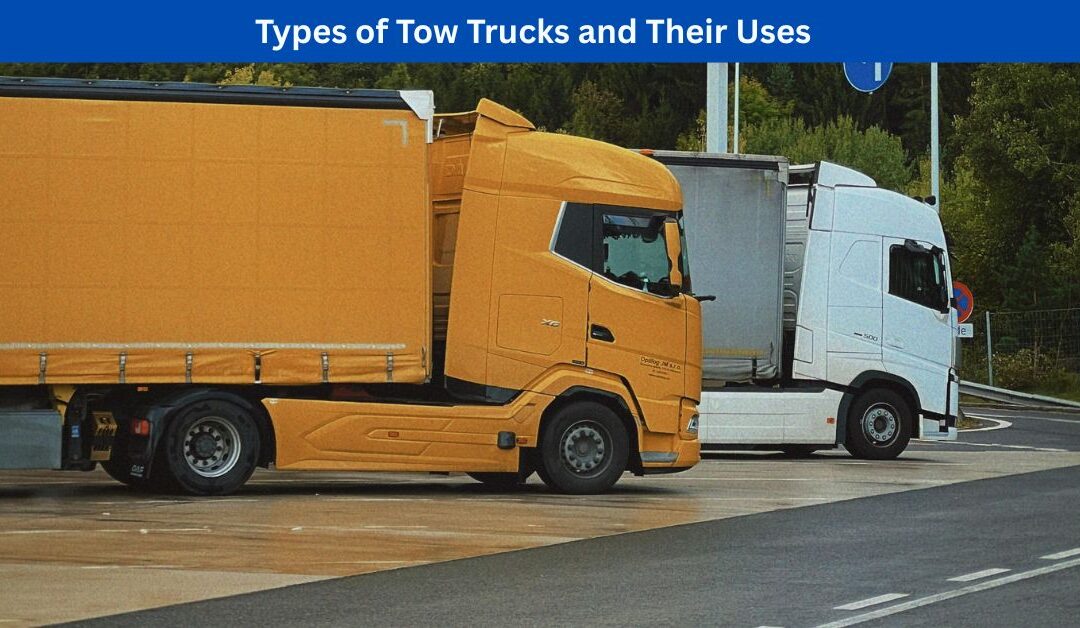
Tow trucks are essential vehicles in the automotive and roadside assistance industry. They are designed to transport broken-down, damaged, or illegally parked vehicles safely from one location to another. However, not all tow trucks are the same. Different types are built for different situations, vehicle sizes, and levels of damage. Understanding these types helps you know what kind of service is best for your situation and why professionals choose specific trucks for specific jobs.
1. Flatbed Tow Trucks – The Safest Transport Method
Flatbed tow trucks are one of the most commonly used and safest towing options. They feature a long, flat platform on the back of the truck where the entire vehicle is loaded. Once placed on the platform, the vehicle is secured using strong straps, ensuring it remains stable during transport.
The biggest advantage of flatbed towing is that all four wheels of the vehicle are lifted off the ground. This prevents any wear and tear on the tires, suspension, or transmission. Because of this, flatbeds are the preferred choice for luxury cars, sports cars, and vehicles that have been severely damaged in accidents.
Flatbed towing is also widely used for long-distance transportation. Since the vehicle is completely stationary on the truck, there is less risk of mechanical stress or additional damage during travel. This makes it ideal for transporting vehicles between cities or across long highways.
Another important benefit is versatility. Flatbed tow trucks can handle almost any type of vehicle, including SUVs, small trucks, and even motorcycles when properly secured. Because of their safety and flexibility, they are considered the gold standard in modern towing services.
2. Wheel-Lift Tow Trucks – Fast and Efficient Recovery
Wheel-lift tow trucks are another widely used option, especially for short-distance towing and quick roadside assistance. Instead of loading the entire vehicle onto a platform, this system uses a metal yoke that lifts either the front or rear wheels off the ground, while the other wheels remain in contact with the road.
This method is faster than flatbed towing and allows tow truck operators to hook up vehicles quickly, making it ideal for urban environments where speed is important. It is commonly used for light vehicles such as sedans and small SUVs.
Wheel-lift towing is also more cost-effective compared to flatbed towing. Because it requires less equipment and setup time, it is often the preferred choice for short-distance recovery, such as moving a car from a breakdown location to a nearby repair shop.
However, wheel-lift towing is not suitable for all vehicles. Cars with all-wheel drive or low ground clearance may suffer damage if not handled correctly. This is why professional tow operators carefully assess the vehicle before choosing this method.
Despite its limitations, wheel-lift towing remains an essential part of the towing industry due to its speed, efficiency, and affordability.
3. Hook and Chain Tow Trucks – Traditional but Limited Use
Hook and chain tow trucks are one of the oldest towing methods still known today. In this system, chains are attached to the vehicle’s frame or axle, and part of the vehicle is lifted while the rest is dragged along the road.
While this method was widely used in the past, it has become less common due to the risk of vehicle damage. The chains can scratch the body, damage suspension components, and put unnecessary stress on the frame.
Because of these risks, hook and chain towing is rarely used for modern vehicles. Instead, it is mostly used for junk cars, scrap vehicles, or situations where the condition of the vehicle does not matter.
One advantage of this method is its simplicity and strength. It is capable of quickly moving heavily damaged vehicles that cannot be rolled or lifted using modern equipment.
However, due to the availability of safer options like flatbed towing, hook and chain systems are now considered outdated for most roadside assistance needs.
4. Heavy-Duty Tow Trucks – Built for Large Vehicles
Heavy-duty tow trucks are specially designed to handle large, heavy vehicles such as buses, trucks, RVs, and construction equipment. These trucks are built with powerful engines, reinforced frames, and advanced hydraulic systems to manage extreme weight.
Unlike standard tow trucks, heavy-duty versions are equipped with multiple axles and stronger towing arms. This allows them to safely lift and transport vehicles that can weigh several tons.
These trucks are essential for commercial transport and highway recovery operations. For example, when a large truck breaks down on a highway, a heavy-duty tow truck is required to clear the road safely and quickly.
Heavy-duty towing also plays a key role in accident recovery involving large vehicles. Because of their size and weight, these vehicles cannot be moved using standard towing methods.
Operators of heavy-duty tow trucks require specialized training. Handling such large loads requires precision, experience, and strict safety procedures to prevent accidents during recovery and transport.
5. Specialized Recovery Tow Trucks – For Complex Situations
Specialized recovery tow trucks are designed for difficult and unusual towing situations. These include vehicles stuck in mud, sand, water, or deep ditches, as well as overturned or severely damaged vehicles.
These trucks are equipped with advanced recovery tools such as winches, rotating booms, and hydraulic arms. These tools allow operators to reach and recover vehicles from hard-to-access locations.
One of the key advantages of recovery tow trucks is their ability to handle emergencies. For example, if a vehicle goes off-road or gets stuck in a remote area, these trucks can safely retrieve it without causing further damage.
Recovery towing often requires careful planning. Operators must assess the terrain, vehicle condition, and surrounding environment before attempting recovery. This ensures both the safety of the vehicle and the towing team.
These trucks are also commonly used in accident recovery situations where vehicles are overturned or positioned dangerously on the road. Their advanced equipment allows for controlled and safe recovery even in challenging conditions.
Conclusion
Tow trucks come in different types because not all towing situations are the same. From flatbed trucks that offer maximum safety, to heavy-duty and recovery trucks designed for complex jobs, each type plays an important role in the towing industry.
Understanding these different tow truck types helps drivers make better decisions during emergencies and gives insight into how professional towing companies operate. Whether it’s a simple breakdown or a complex recovery, there is always a specific tow truck designed to handle the job safely and efficiently.
Contact Us
Berwick Towing & Transport
27B William Rd
Berwick VIC 3806
(03) 7035 7815
www..berwick-towing.com.au/