Towing a 4WD (Four-Wheel Drive) vehicle is significantly different from towing a 2WD (Two-Wheel Drive) car. Each type of drivetrain operates differently, and using the wrong towing method can lead to serious mechanical damage, especially to the transmission, transfer case, and differential. Tow truck operators and vehicle owners must understand the key differences in towing techniques to ensure safe transportation. The decision between flatbed towing, wheel-lift, or dolly towing largely depends on whether the vehicle is front-wheel drive, rear-wheel drive, or 4WD. Professional handling is essential to avoid costly damage and protect vehicle integrity during recovery or transportation.
Understanding the Drivetrain Differences
In a 2WD vehicle, either the front or rear wheels receive power, depending on whether it’s front-wheel drive (FWD) or rear-wheel drive (RWD). These vehicles are generally easier to tow because their non-driven wheels can be left on the ground without affecting the drivetrain. In contrast, 4WD vehicles power all four wheels through a transfer case. Dragging any wheels while the vehicle is in gear or connected to the drivetrain can cause severe mechanical stress. If the transfer case remains engaged during towing, rotational force can damage the internal gears, burn the transmission fluid, or lock the drivetrain. Understanding these internal mechanics is crucial before choosing a towing method.
Towing Methods for 2WD Vehicles
Towing a 2WD vehicle is relatively straightforward when done correctly. For front-wheel drive cars, a tow truck can lift the front axle, allowing the rear wheels to roll freely. Rear-wheel drive vehicles may be towed in reverse with the rear axle lifted. However, caution is still required, as towing over long distances with the drive wheels on the ground can overheat the transmission. Wheel-lift towing and tow dollies are commonly used for short-distance towing of 2WD vehicles. In most cases, flatbed towing remains the safest and most reliable option, especially for vehicles with low clearance or automatic transmissions.
Safe Towing Procedures for 4WD Vehicles
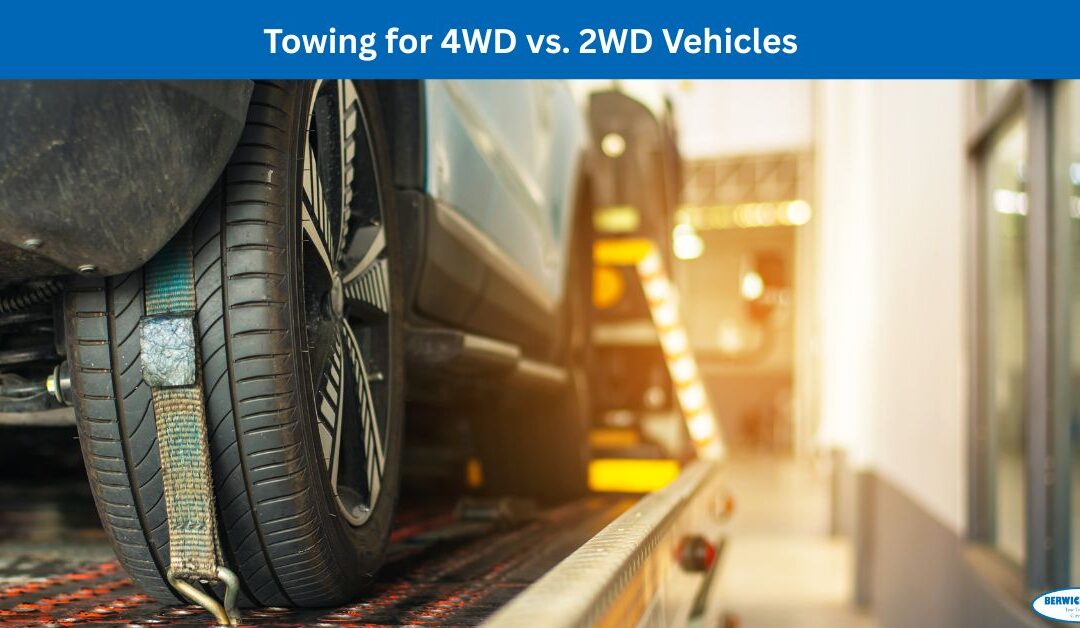
Towing a 4WD vehicle requires extra care to prevent drivetrain damage. The safest approach is always flatbed towing, where all four wheels are lifted off the ground. If flatbed towing is not available, a tow dolly combined with disengagement of the transfer case may be used, but this requires specific manufacturer instructions. Some 4WD vehicles offer a neutral (N) setting in the transfer case that allows the wheels to rotate freely without engaging the transmission. Others may require manual hub unlocking or removal of the driveshaft. Attempting to tow without disengaging the drivetrain can cause catastrophic damage to the transmission, even over short distances.
Preventing Damage and Ensuring Safety During Transport
Regardless of drivetrain, securing the vehicle correctly during towing is critical. Vehicles should be anchored using soft straps attached to frame-mounted tie-down points, not suspension components. During flatbed loading, winches must be used to gently pull the vehicle onto the platform without spinning the wheels. Vehicles with locking differentials, electronic traction controls, or off-road suspension systems require special attention to avoid stress on control arms or axles. Regular inspection of straps during transport ensures the vehicle remains stable, particularly on long trips or rough roads. Avoiding improper towing practices not only protects the vehicle but also reduces the risk of road hazards.
Conclusion
Towing 4WD and 2WD vehicles requires an understanding of their mechanical differences and a commitment to safe procedures. While 2WD vehicles allow more flexibility with towing methods, 4WD vehicles demand precise handling to avoid transmission and transfer case damage. Flatbed towing remains the gold standard for all drivetrains, especially for modern vehicles with electronic components. For tow operators, mastering these differences builds professionalism and trust with customers. For vehicle owners, choosing a towing service experienced in drivetrain-specific recovery ensures peace of mind and protection of valuable mechanical systems.
Contact Us
Berwick Towing & Transport
27B William Rd
Berwick VIC 3806
(03) 7035 7815
www..berwick-towing.com.au/