
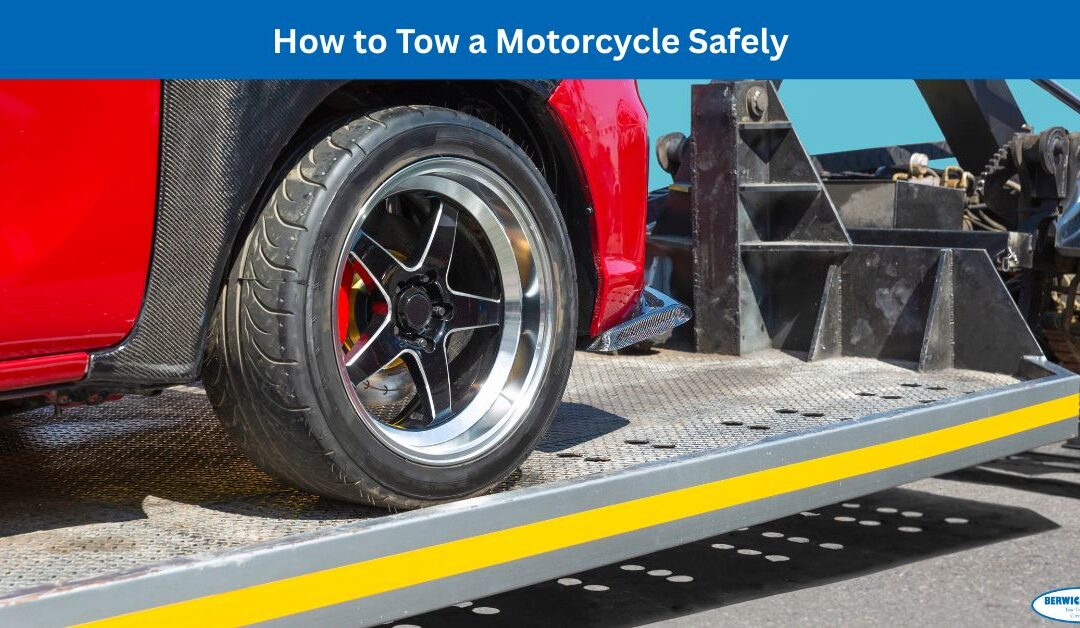
Motorcycle towing requires a different level of precision and care compared to standard vehicles. Unlike cars, motorcycles rely on balance, are exposed, and are far more vulnerable to damage if not handled properly. Tow truck operators and riders alike must understand the safest techniques and preparation methods to ensure the bike reaches its destination without harm. From choosing the right equipment to proper loading and securing methods, safe motorcycle towing depends on knowledge, patience, and attention to detail.
Understanding the Challenges of Towing Motorcycles
Motorcycles are lighter yet more delicate than cars, with exposed parts such as handlebars, chains, and fairings that can be easily damaged. Unlike a car that rests on four sturdy wheels, a motorcycle stands on two, relying on perfect balance. If improperly secured, it may tip, slide, or suffer mechanical strain. Many motorcycles also have different weight distributions, especially touring bikes with saddlebags or sports bikes with fairings. Sudden jerks or incorrect strapping can damage suspension, handlebars, or body panels. The challenge lies not just in towing, but in preventing movement during transport. Understanding center of gravity, avoiding pressure on fragile components, and using appropriate mounts are all essential. Towing professionals must treat motorcycles as precision vehicles, not just machinery.
Choosing the Right Towing Equipment
Not all towing equipment is suitable for motorcycles. Flatbed tow trucks are generally the safest option, offering full support of the motorcycle without excessive strain. Wheel-lift systems can be risky if not designed specifically for bikes. Motorcycle-specific trailers or cradles help hold the front wheel in place while stabilizing the frame. Proper straps such as soft loops, ratchet straps, or handlebar harnesses are preferred to prevent scratches and damage. Metal hooks should never directly touch paint or chrome surfaces. Some tow operators use wheel chocks to secure the front tire before strapping, reducing the risk of lateral movement. Tow dollies designed for motorcycles are useful for short distances, while hydraulic lifts offer an advanced solution for heavy bikes. Choosing the correct equipment ensures that the motorcycle is not only safely loaded but also adequately supported throughout the journey.
Proper Loading and Securing Techniques
Loading must be done slowly and steadily, preferably using a wide, non-slip ramp. A towing operator should never ride the motorcycle up the ramp, as this risks injury and mechanical damage. Instead, the bike should be walked or winched carefully onto the flatbed or trailer. Once positioned, it must be upright and centered. The front wheel is locked into a chock or cradle, and the bike is stabilized before strapping. Straps should be attached to solid, non-moving parts such as the lower triple tree or frame, never to mirrors, handlebars, or foot pegs. Even tension on both sides prevents leaning. The bike’s suspension should be slightly compressed to maintain tension during movement, but not overly tightened to avoid damaging forks or shocks. After securing, operators should double-check each strap and apply a final tug test. A stable motorcycle should not sway, tilt, or slide under force.
Driving and Transporting with Caution
Once on the road, transporting a motorcycle demands gentler driving than towing standard vehicles. Tow operators should avoid sharp turns, sudden braking, or quick accelerations. Bumps and potholes can shift a poorly secured bike, leading to potential falls. Smooth lane changes and controlled speeds are essential. Regular checks during longer journeys are critical to ensure straps remain tight and the motorcycle hasn’t shifted. Vibrations on highways may loosen fittings, so scheduled stops offer chances for re-tightening. Awareness of weather is also critical. Rain can create slippery deck surfaces, while high winds can affect motorcycle stability. A professional understands that towing is only half the job; safe delivery means adjusting driving habits to protect the motorcycle as if it were their own.
Post-Transport Care and Inspection
Once at the destination, safely unloading the motorcycle is just as important as loading it. The straps should be removed gradually while ensuring the bike is still supported. Using a steady hand or winch assists in preventing sudden drops while rolling off the ramp. After unloading, both the operator and owner should inspect the motorcycle for any signs of damage. Check fairings, forks, panels, and alignment. Confirm that no stress was placed on sensitive parts during transport. Any marks or pressure points should be brought to attention immediately. Professional towing companies often document motorcycles before towing with photos to assure clients of condition. Good towing practice does not end with delivery; it concludes with customer reassurance and professional accountability.
Conclusion
Towing a motorcycle safely demands more than just equipment—it requires expertise, respect for the vehicle, and careful technique. From understanding balance and fragility to using specialized gear, every step must be deliberate and precise. Proper loading, secure strapping, cautious driving, and careful unloading ensure the motorcycle arrives exactly as it left. For towing professionals, mastering motorcycle transport builds trust and reputation. For riders, choosing a skilled towing service offers peace of mind. When done correctly, motorcycle towing becomes a showcase of technical skill and commitment to safety.
Contact Us
Berwick Towing & Transport
27B William Rd
Berwick VIC 3806
(03) 7035 7815
www..berwick-towing.com.au/