
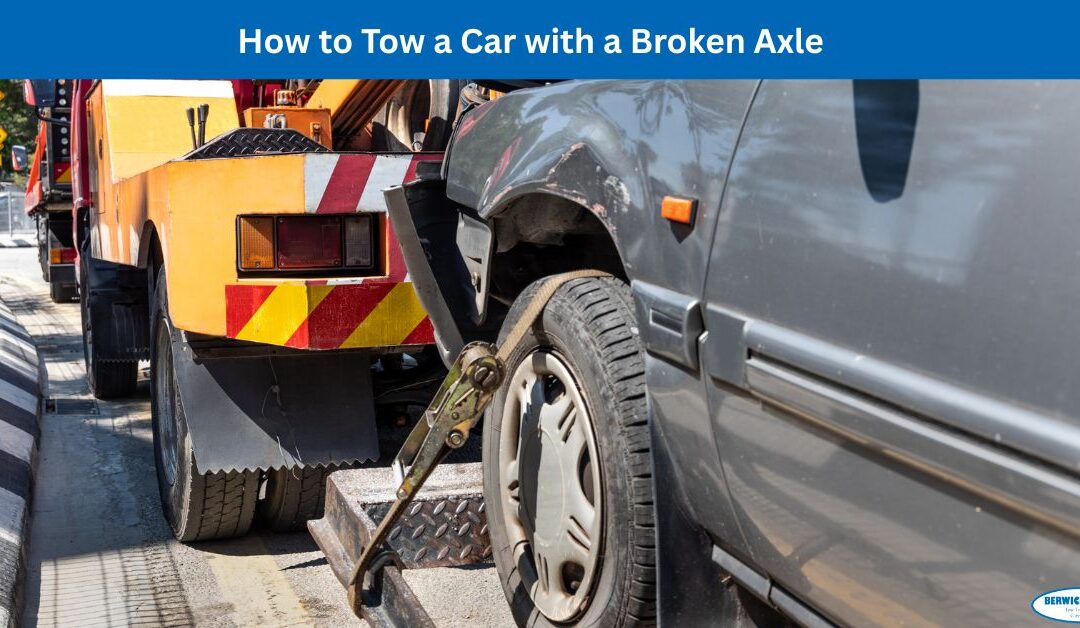
Towing a car with a broken axle is one of the most challenging recovery situations in the towing industry. Unlike routine breakdowns, a broken axle affects the vehicle’s ability to roll, steer, or support its own weight. Attempting to tow such a vehicle without proper technique can cause severe damage to the drivetrain, suspension, and even the chassis. In many cases, traditional towing methods are not safe or possible. Tow operators must use specialized equipment and follow careful procedures to ensure that the vehicle is transported securely and safely. Understanding how to manage axle-related breakdowns is essential for any professional towing service and a reassurance to vehicle owners facing a stressful mechanical failure.
Understanding the Severity of a Broken Axle
A broken axle can completely immobilize a car. This critical component is responsible for transferring power from the transmission to the wheels, and when it fails, the affected wheel may not move at all. In severe cases, the wheel may detach or hang at an unnatural angle, making the vehicle unsafe to drag or tow conventionally. Dragging the vehicle without proper support can cause further structural damage, including bent suspension arms, damaged differential units, or even frame warping. It is crucial for the towing operator to assess the extent of the axle damage before attempting recovery. If both axles are compromised or the vehicle is stuck in gear, even loading onto a flatbed may require additional lifting tools or skates.
Choosing the Right Towing Method
When dealing with a broken axle, the only safe and recommended method is flatbed towing. Traditional wheel-lift towing cannot be used because one or more wheels may not be able to rotate properly. A flatbed truck lifts the entire vehicle off the ground, preventing any pressure on the broken axle or suspension system. In some cases, heavy-duty tow trucks with integrated cranes or boom lifts may be used to safely lift the vehicle from the ground, especially if it is stuck or collapsed on one side. Wheel skates may also be required to move the vehicle from its current position to the loading platform, especially if the wheels cannot roll due to severe damage or locking.
Safe Loading and Securing Techniques
Loading a car with a broken axle requires precision. The operator must use a winch to carefully pull the vehicle onto the flatbed, ensuring it does not drag or scrape the undercarriage. If the axle has broken completely, the wheel may fold or rotate unpredictably, so stabilizing the car with wheel cradles or dollies is essential. Once the vehicle is in position, securing it firmly is critical. Straps should be attached to the frame or factory tow points, never to the broken axle itself. Using chains or improper hook points can lead to additional damage. The operator must distribute tension evenly to prevent movement during transport, and frequent checks should be made, especially on long-distance hauls.
Preventing Further Damage During Transport
With a broken axle, the biggest risk is causing additional unseen damage while loading or transporting the car. Excessive pulling force during winching can stress the vehicle’s suspension or steering components. Sharp inclines or sudden tilts on the flatbed may cause the car to lean dangerously. To prevent this, operators must adjust bed angles gradually and use soft straps to avoid scratching paint or bending bodywork. Cars with heavy front or rear axles, such as SUVs or trucks, may require reinforced loading ramps or multiple tie-down points. It is crucial to transport the vehicle directly to a mechanic rather than storing it in an unsecured lot to minimize unnecessary movement and risk.
Conclusion
Towing a car with a broken axle is a delicate procedure that demands experience, the right equipment, and careful technique. Unlike ordinary breakdowns, an axle failure renders the vehicle unstable and difficult to control, making flatbed towing the only safe choice. Proper loading, stabilization, and secure tie-down practices are essential to prevent further mechanical or structural damage. For towing companies, handling axle-related recoveries with professionalism and precision builds trust and proves expertise in complex recovery situations. For vehicle owners, choosing a towing provider skilled in these scenarios ensures peace of mind during one of the most stressful types of vehicle breakdowns.
Contact Us
Berwick Towing & Transport
27B William Rd
Berwick VIC 3806
(03) 7035 7815
www..berwick-towing.com.au/