Towing services are not the same for every vehicle. One of the most important distinctions in the industry is between light-duty towing and heavy-duty towing. Each type is designed for different vehicle sizes, weights, and situations. Understanding the difference helps you know what kind of towing service is needed when a vehicle breaks down, gets stuck, or is involved in an accident.
1. What Is Light-Duty Towing?
Light-duty towing refers to the transportation of smaller vehicles such as cars, motorcycles, small SUVs, and vans. This is the most common type of towing service used for everyday roadside assistance.
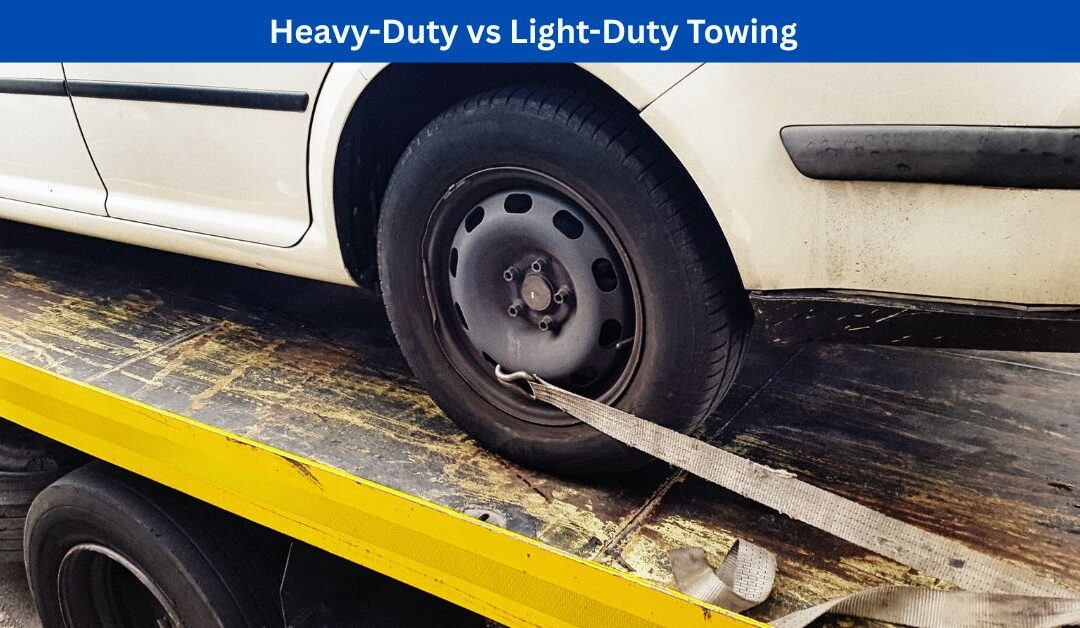
Light-duty tow trucks are designed to handle standard passenger vehicles. They are usually equipped with wheel-lift systems or flatbed platforms, depending on the situation. These trucks are quick, efficient, and ideal for urban areas where most breakdowns happen.
This type of towing is commonly used for situations like flat tires, battery failures, minor accidents, or vehicles that simply cannot start. Because the vehicles are lighter, the towing process is faster and requires less powerful equipment.
Light-duty towing is also more affordable compared to heavy-duty services, making it the most frequently requested type of towing.
2. What Is Heavy-Duty Towing?
Heavy-duty towing is designed for large and extremely heavy vehicles that standard tow trucks cannot handle. This includes buses, trucks, trailers, construction equipment, and commercial vehicles.
Heavy-duty tow trucks are built with reinforced frames, powerful engines, and advanced hydraulic systems. They are capable of lifting and transporting vehicles that weigh several tons.
This type of towing is often used on highways, construction sites, and commercial transport routes. It requires specialized training and experience because handling large vehicles comes with higher safety risks.
Heavy-duty towing is essential for clearing accidents involving large vehicles and ensuring traffic flow is restored quickly and safely.
3. Equipment Differences Between Light and Heavy Duty
The equipment used in light-duty and heavy-duty towing is significantly different. Light-duty tow trucks usually use wheel lifts or flatbed systems designed for smaller vehicles. These systems are easier to operate and require less power.
Heavy-duty tow trucks, on the other hand, use advanced recovery systems such as multi-stage hydraulic booms, high-capacity winches, and reinforced towing arms. These tools are designed to handle extreme weight and complex recovery situations.
Heavy-duty trucks also have additional axles and stronger braking systems to support heavy loads safely during transport.
The difference in equipment is one of the main reasons why heavy-duty towing requires more expertise and training compared to light-duty towing.
4. Cost and Response Time Differences
Another key difference between light-duty and heavy-duty towing is cost. Light-duty towing is generally more affordable because it involves smaller vehicles and simpler equipment.
Heavy-duty towing, however, is more expensive due to the size of the vehicles involved and the specialized equipment required. The process also takes more time and manpower, especially in complex recovery situations.
Response time can also vary. Light-duty towing is usually faster because tow trucks are more widely available in urban areas. Heavy-duty towing may take longer to dispatch because fewer specialized trucks are available.
Despite these differences, both services are essential for maintaining road safety and vehicle recovery efficiency.
5. When Each Type of Towing Is Needed
Knowing when to use light-duty or heavy-duty towing depends entirely on the vehicle and situation.
Light-duty towing is needed for everyday problems such as breakdowns, minor accidents, dead batteries, or flat tires. It is the most common type of roadside assistance for regular drivers.
Heavy-duty towing is required when large commercial vehicles break down, when buses are involved in accidents, or when construction equipment needs to be moved. It is also used for large-scale recovery operations on highways.
Professional towing companies assess each situation carefully before deciding which type of towing is required. This ensures the safest and most efficient solution is used every time.
Conclusion
Heavy-duty and light-duty towing both play essential roles in the towing industry, but they serve very different purposes. Light-duty towing is ideal for everyday vehicles and minor roadside issues, while heavy-duty towing is designed for large, complex, and high-weight recovery situations.
Understanding the difference helps drivers know what to expect when they call for assistance and highlights the importance of using the right equipment for each job. Professional towing companies rely on both types to ensure that every vehicle is handled safely, efficiently, and correctly.
Contact Us
Berwick Towing & Transport
27B William Rd
Berwick VIC 3806
(03) 7035 7815
www..berwick-towing.com.au/