
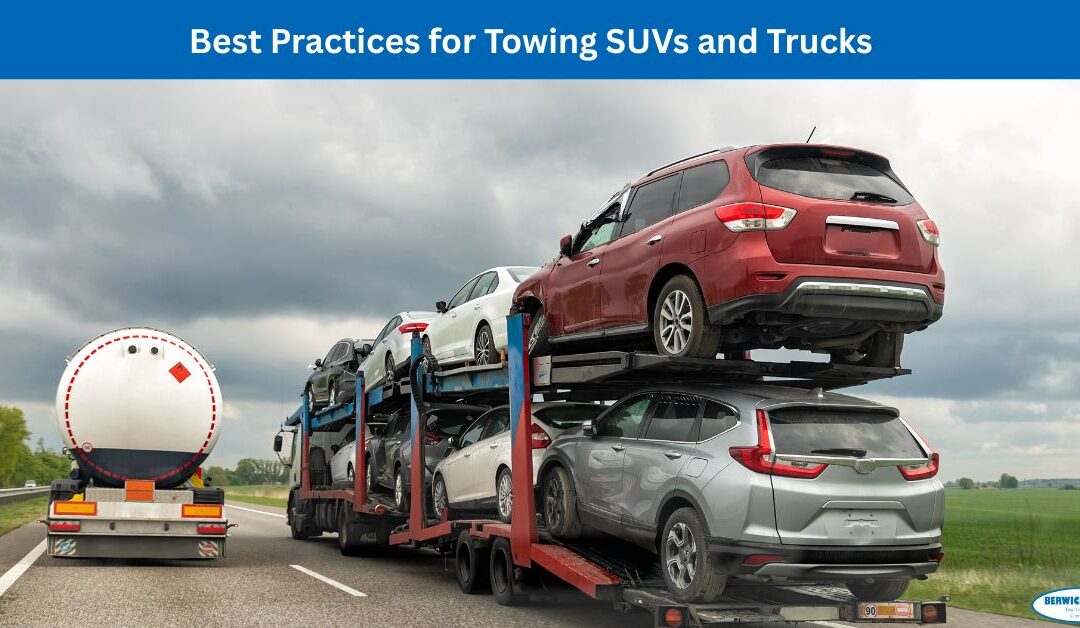
Towing SUVs and trucks requires a higher level of skill and preparation compared to smaller vehicles. These vehicles are heavier, often equipped with off-road systems, and may have unique drivetrains such as four-wheel drive (4WD) or all-wheel drive (AWD). Improper towing techniques not only risk damage to the vehicle but also pose serious safety hazards on the road. Whether it’s a breakdown, accident recovery, or transportation of heavy-duty vehicles, towing professionals must follow strict best practices to ensure safety and vehicle integrity. Understanding the right techniques, equipment, and preparation steps is essential for successful towing of large vehicles like SUVs and trucks.
Understanding the Weight and Drivetrain of SUVs and Trucks
The first step in towing SUVs and trucks safely is understanding their weight and drivetrain configuration. SUVs and trucks are significantly heavier than standard sedans, often weighing between 2 to 4 tons. Some trucks designed for towing or off-road use may exceed even higher limits. This additional weight influences towing capacity, braking distance, and load handling requirements. Many SUVs and trucks are equipped with 4WD or AWD systems, which complicate towing if all wheels are not elevated. Dragging a 4WD vehicle with two wheels on the ground can cause transfer case or transmission damage. Tow operators must identify whether the vehicle is front-wheel drive, rear-wheel drive, 4WD, or AWD before choosing a towing method.
Choosing the Right Towing Equipment
Selecting appropriate towing equipment is crucial for handling heavy vehicles like SUVs and trucks. Flatbed tow trucks are the safest option because they completely lift the vehicle off the ground, protecting drivetrains and reducing wear. In cases where flatbeds are unavailable, wheel-lift tow trucks with dollies may be used, but only when the vehicle’s power wheels are fully lifted. Heavy-duty or medium-duty tow trucks are often required for large pickup trucks, especially diesel models or lifted off-road vehicles. Tow operators must use heavy-duty tie-down straps instead of chains, ensuring secure anchoring without damaging the frame. Proper loading ramps, winches, and stabilizers also play key roles in supporting the vehicle’s weight during loading and transport.
Securing the Vehicle for Safe Transport
Once the SUV or truck is on the towing platform, it must be secured correctly to prevent movement during transit. Large vehicles have a higher center of gravity, making them more susceptible to tipping or shifting on sudden turns or braking. Tow operators must apply wheel chocks and secure the vehicle using at least four tie-down points, typically attached to the vehicle’s frame or designated mounting points. The straps must be tightened evenly to avoid over-tension on one side. Additionally, tow operators should double-check that parking brakes are disengaged when using winches or flatbeds to avoid strain on the braking system. Failure to secure heavy vehicles properly can lead to accidents, vehicle damage, or road hazards.
Handling Special Situations: Off-Road, Accident, or Disabled Vehicles
Many SUVs and trucks end up needing towing due to off-road misuse, mud entrapment, axle failure, or heavy-duty work incidents. Recovering these vehicles often involves more than standard towing procedures. In off-road situations, winching may be necessary, requiring careful anchoring points to avoid frame damage. Tow operators must use recovery snatch blocks and ensure proper resistance management. Accident-damaged trucks may require partial dismantling or wheel skates if suspension systems are broken. In the case of mechanical failures like locked axles or broken transmissions, using flatbeds becomes non-negotiable. Safety precautions must be taken to avoid secondary damage during recovery and transport.
Conclusion
Towing SUVs and trucks safely involves more than just power and equipment; it requires extensive knowledge, careful planning, and precise execution. These large vehicles demand strong towing platforms, correct securing methods, and awareness of drivetrain complexities. When done properly, towing professionals can ensure the safety of both vehicle and operator, preventing costly damage and road hazards. As SUVs and trucks continue to dominate the roads, towing companies must adapt their techniques and training to handle these heavy vehicles effectively. With the right approach and expertise, even the toughest towing challenges involving large vehicles can be managed safely and efficiently.
Contact Us
Berwick Towing & Transport
27B William Rd
Berwick VIC 3806
(03) 7035 7815
www..berwick-towing.com.au/